Frequently asked questions
These answers are general. Your own circumstances may be different, and we can talk about anything here in more detail before your procedure.
Will I wake up during the operation?
Awareness during general anaesthesia is very rare. Your anaesthetist stays with you throughout, continuously adjusting the anaesthetic and monitoring your body's responses, and may use depth of anaesthesia monitoring where appropriate. If you are having sedation rather than a general anaesthetic, it is normal to be drowsy but to remember parts of the procedure. We will discuss which you are having beforehand.
Can I eat or drink before my anaesthetic?
You will be asked to stop eating, and later to stop drinking, for a set time before your procedure. This lowers the risk of stomach contents entering your lungs while you are anaesthetised. You will receive specific fasting times from the hospital or the practice. Please follow those instructions, and ask if anything is unclear. See Preparing for Your Procedure.
Should I take my usual medicines?
Many medicines should be continued, but some may need to be adjusted or paused, including blood thinners, some diabetes medicines and GLP-1 or weight-loss medicines. Please do not stop any medicine on your own. Your anaesthetist, surgeon, GP or the prescribing doctor will give you individual advice. Bring a list of everything you take, including vitamins and supplements. See Medications Before Anaesthesia.
Will I feel sick afterwards?
Nausea is one of the more common side effects, but it does not happen to everyone and it can often be prevented. If you have felt sick after a previous anaesthetic, or you get motion sickness, please tell me. Anti-nausea medications can be given during your anaesthetic and in recovery.
Can I drive home after my procedure?
No. After a general anaesthetic or sedation, your judgement and reaction times can be affected for some time, even if you feel well. You will need a responsible adult to take you home, and usually someone to stay with you overnight after day surgery. For at least 24 hours you should not drive, operate machinery, drink alcohol or make important decisions. The hospital will tell you what applies to you.
I have a cold. Should I still come?
Please contact the practice or your surgeon as soon as possible. A mild cold may not be a problem, but a chest infection, fever or significant cough can increase the risks of anaesthesia, and it may be safer to postpone planned surgery. It is better to ask early than to arrive unwell on the day.
I've had problems with anaesthesia before. What should I do?
Please tell me before your procedure, and include it in your anaesthetic questionnaire. This includes severe nausea, slow waking, a reaction to a medication, or being told your airway was difficult. Please also tell me if a blood relative has had a serious reaction to an anaesthetic. Any letters or alert cards you were given are very helpful.
I'm worried about my teeth.
Damage to teeth during anaesthesia is rare, but it is more likely with loose, crowned, capped or fragile teeth, or with bridgework. Let me know about any dental work or loose teeth so that extra care can be taken. You may be asked to remove dentures before your anaesthetic.
Can my family stay with me?
Family or a support person can usually stay with you while you wait and can join you once you are settled after recovery. Arrangements vary between hospitals, and for children a parent or carer can often be present as the anaesthetic starts. Please ask the hospital about its policy.
What if I have sleep apnoea?
Please tell me if you have obstructive sleep apnoea, or if you snore heavily or have been told you stop breathing in your sleep. Sleep apnoea can affect your breathing after anaesthesia and with some pain medicines. If you use a CPAP machine, bring it with you to hospital.
How much will my anaesthetic cost?
This depends on your procedure, how long it takes and your health fund arrangements. Before planned surgery you will usually receive a written estimate with my pre-operative paperwork. See Fees & Accounts, or contact the practice with any questions.
I read something online, or asked an AI tool. Can I ask about it?
Yes, please do. Many people look things up on websites, social media or AI tools such as ChatGPT before surgery, and this often leads to useful questions. Some information is general, out of date or simply wrong, so it helps to talk through what applies to you. See Understanding Your Anaesthetic & Informed Consent.
Will I meet my anaesthetist before the operation?
Yes. Before your procedure I will review your health information and meet you to talk about your anaesthetic plan, answer your questions and confirm that you are happy to proceed. For major surgery or complex medical conditions, this conversation may take place earlier, in a pre-operative consultation.
Printable instructions
The following guides are being prepared so that you can print them and keep them handy. Printable versions coming soon.
- Preparing for your anaesthetic: a checklist covering fasting, what to bring and what to tell your anaesthetist.
- After your anaesthetic: what to expect at home, and when to seek help.
- Medication checklist: a form to list your medicines, doses and allergies to bring with you.
Medication-related information
Some medicines need careful planning before anaesthesia, including blood thinners, diabetes medicines, and GLP-1 and other weight-loss medicines. Advice is always individual, and you should not stop or change a prescribed medicine unless your anaesthetist, surgeon, GP or prescribing doctor has advised you to. Read more on Medications Before Anaesthesia.
Recovery and discharge guidance
Most people feel drowsy for a while after anaesthesia, and some have a sore throat, nausea or mild confusion that settles over hours to days. You will be discharged when you are awake, comfortable and safe to go home, with instructions from the hospital. Read more, including when to seek help, on Recovery & Aftercare.
ANZCA National Anaesthesia Day posters
Each year on National Anaesthesia Day, the Australian and New Zealand College of Anaesthetists (ANZCA) publishes a poster on a different aspect of anaesthesia care. Together they make a helpful introduction to what anaesthetists do and how you can prepare.
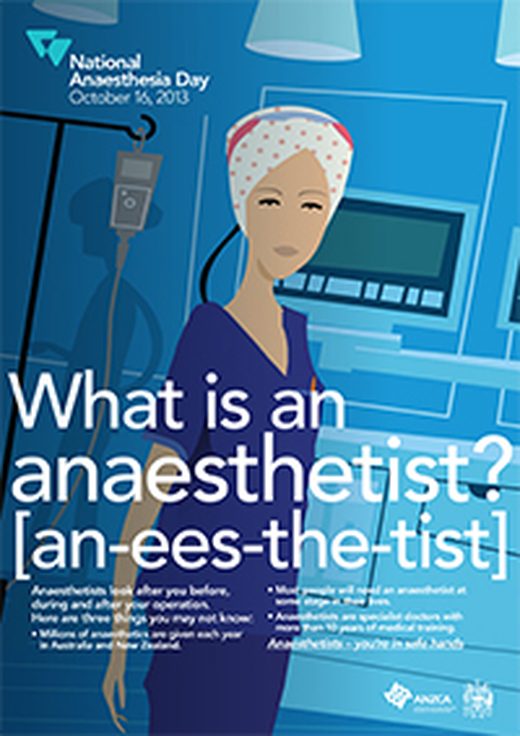
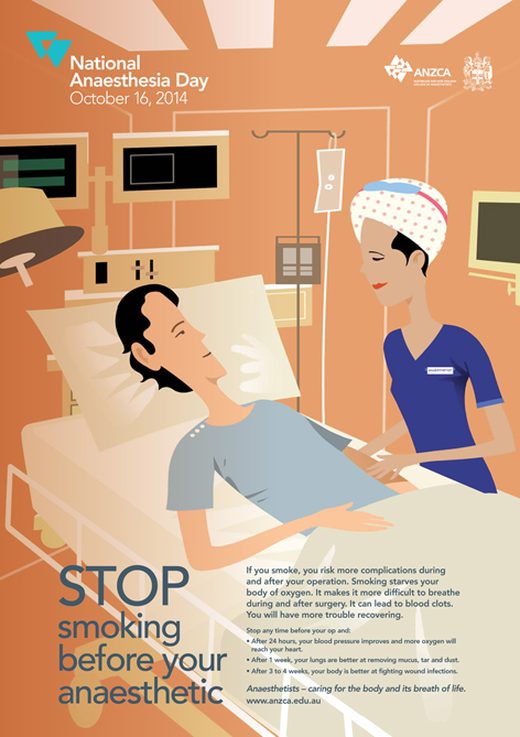
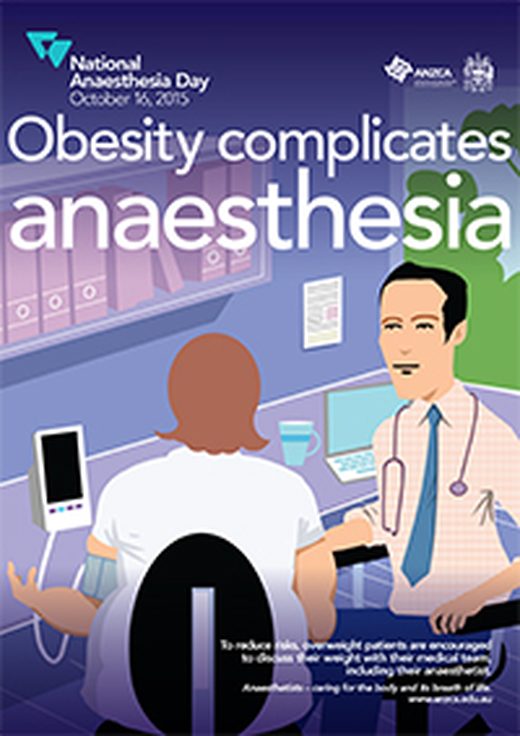
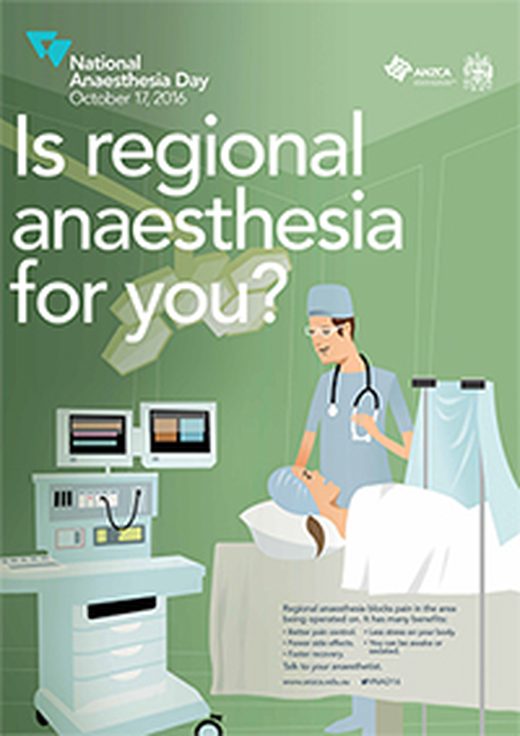
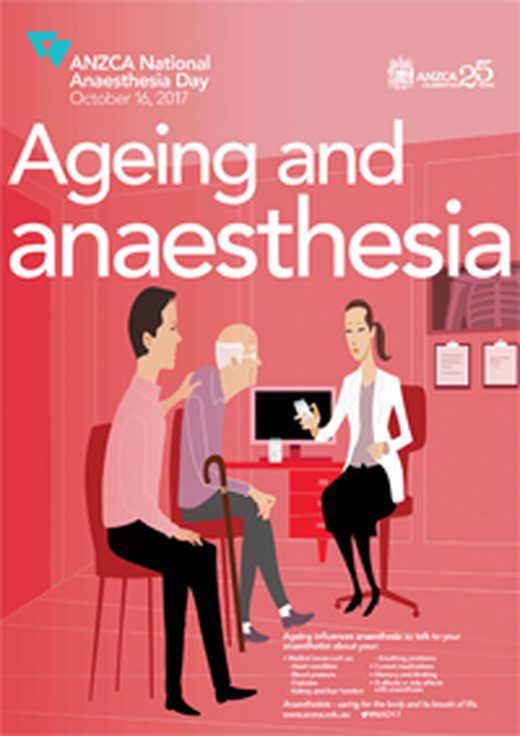
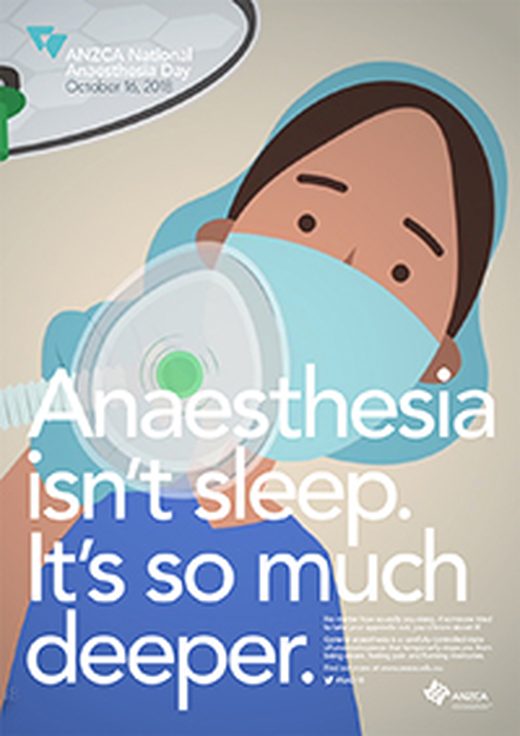
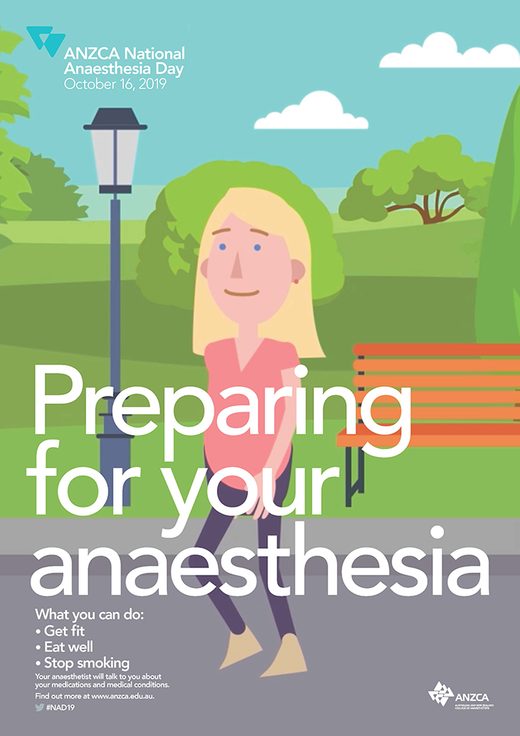
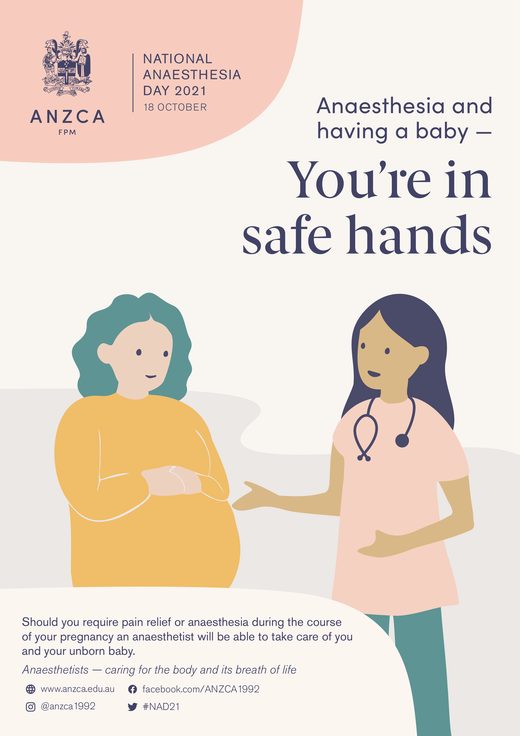
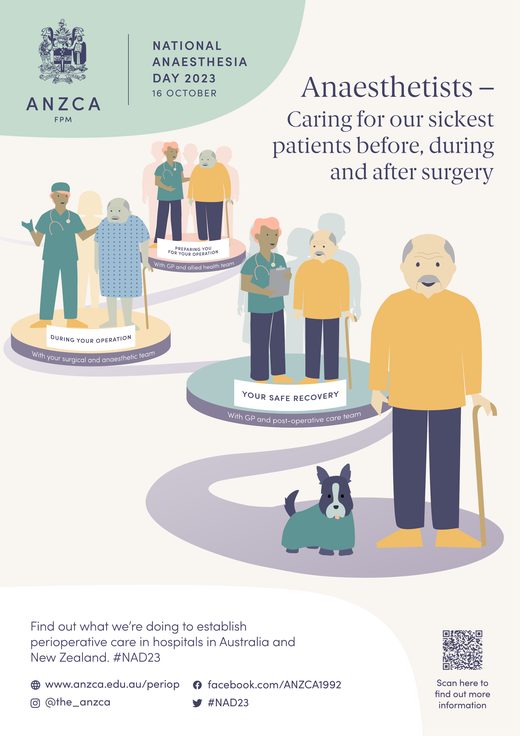
Posters © Australian and New Zealand College of Anaesthetists (ANZCA), reproduced with permission. More information is available from ANZCA patient information.
Professional and public health resources
These organisations publish reliable, independent patient information. They open in a new tab.
- ANZCA patient information: the Australian and New Zealand College of Anaesthetists, which trains and sets standards for specialist anaesthetists.
- ANZCA patient fact sheets: including types of anaesthesia, preparing for your operation, and anaesthesia for endoscopy and joint replacement.
- Royal College of Anaesthetists (UK): risks associated with general anaesthesia: clear infographics showing how common each side effect and risk is.
- Royal College of Anaesthetists (UK): patient leaflets: including Sedation explained and guides to general and regional anaesthesia.
- Australian Society of Anaesthetists: frequently asked questions.
- Healthdirect: general anaesthetic: the Australian Government's free health information service.
- Better Health Channel: general anaesthetics: the Victorian Government's health information website.
- Safer Care Victoria: consumer resources: information for patients, families and carers, including what to expect if care does not go as planned.
Medicare and health insurance links
- Department of Health: Medicare costs: what Medicare pays for private patients in hospital.
- Services Australia: Medicare: enrolment, claiming and Medicare safety nets.
- privatehealth.gov.au: what is covered: how Medicare and private health insurance work together.
- Department of Health: out-of-pocket costs: gap cover and informed financial consent explained.
- Medical Costs Finder: typical costs of common specialist services.
- Private Health Insurance Ombudsman: help with complaints about a health fund.